1734 North Main St., Los ANgeles, CA 90031 call/text 213-479-8672
Professional Headshot Camera Settings That Work
5/22/20266 min read
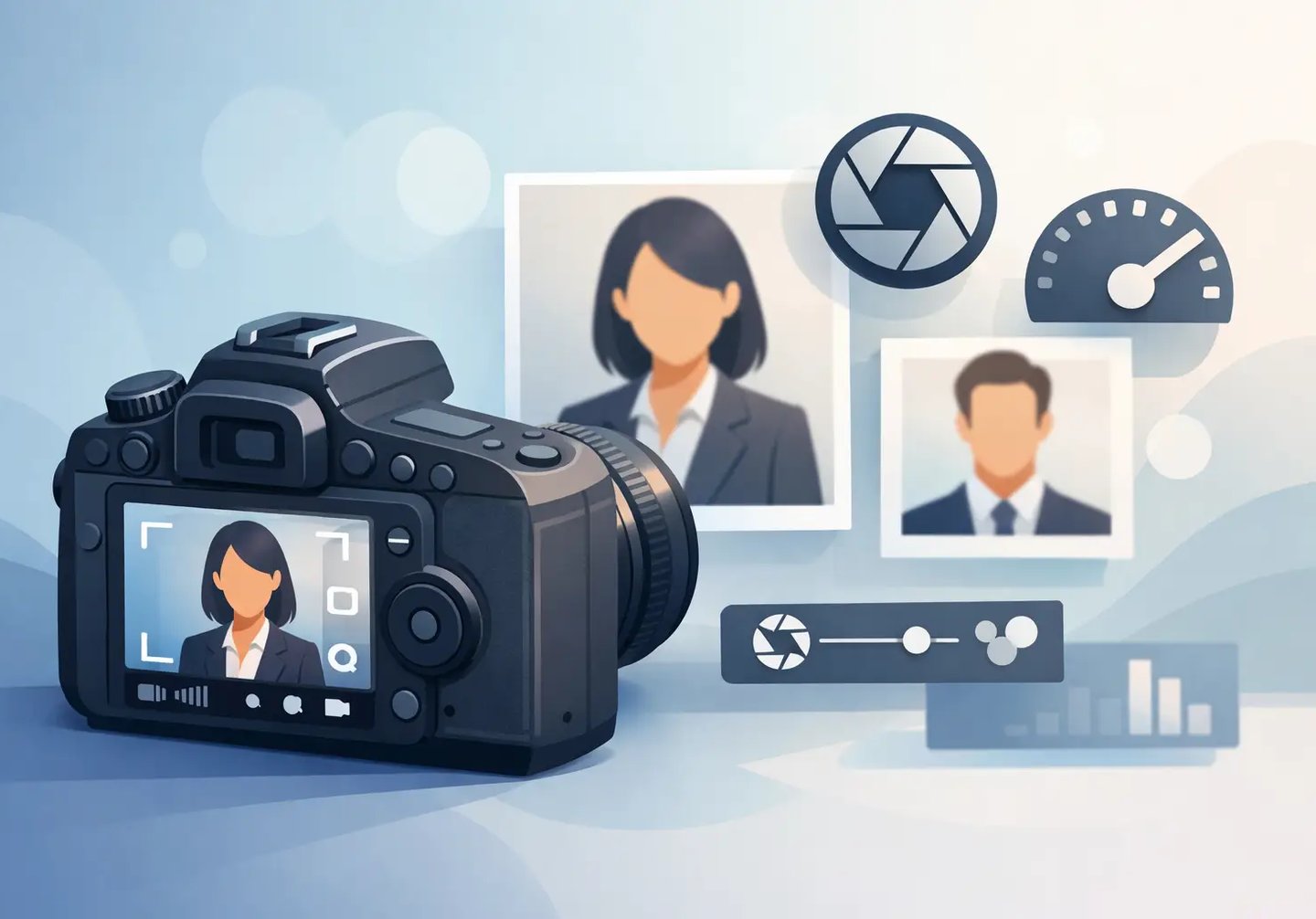

A headshot can lose the room before anyone reads your resume, clicks your casting profile, or watches your reel. That is why professional headshot camera settings matter so much. The right settings do not just make an image look sharp. They shape how credible, current, and bookable you appear the moment someone sees your photo.
For actors, performers, and working professionals in Los Angeles, that first impression has a job to do. It needs to look polished without feeling overproduced, clean without feeling flat, and confident without looking stiff. Camera settings are a big part of that balance. Great lighting and expression still lead the way, but if your aperture is too wide, your focus is off, or your shutter speed is too slow, the final image can miss the standard people expect from a career-focused headshot.
The professional headshot camera settings that matter most
If you want a strong starting point, use a medium telephoto lens, keep your ISO low, choose an aperture that keeps both eyes sharp, and set a shutter speed fast enough to eliminate motion. Those four choices do most of the heavy lifting.
A reliable setup for studio headshots is often around 85mm to 135mm, f/5.6 to f/8, ISO 100 to 200, and a shutter speed around 1/160 to 1/200 when using strobes. That range gives you crisp detail, flattering facial proportions, and enough depth of field to hold focus where it counts. It also avoids one of the biggest mistakes in headshots - trying to blur the background so aggressively that the subject’s ears, hairline, or even one eye starts to fall apart.
That said, there is no single magic formula. Professional headshot camera settings depend on your lighting setup, your lens, how close you are to the subject, and what the image is for. An actor’s commercial headshot may benefit from slightly softer separation and a brighter, more open look. A corporate headshot might call for more even sharpness and a cleaner, more neutral finish.
Aperture: where most headshot mistakes start
Aperture usually gets the most attention because people love that blurred background look. But in headshot photography, going too shallow is often a shortcut to a weaker image. Shooting at f/1.4 or f/2 can look stylish in the wrong genre, but for a professional headshot it can create focus issues that make the image feel less polished.
For most studio headshots, f/5.6 is a strong sweet spot. It gives you enough background separation while keeping facial features clean and consistent. If the subject is angled slightly, leaning forward, or turning one shoulder toward camera, f/6.3 or f/8 can be even safer. The goal is not maximum blur. The goal is a marketable image where the eyes feel alive and the face feels fully present.
If you are shooting outdoors with natural light, you may open up a bit more depending on background distance and available light. Even then, many photographers stay around f/4 to f/5.6 for professional headshots because reliability beats drama. A headshot is a business image first.
Shutter speed: sharp beats almost sharp
People move more than they think. Even in a controlled session, tiny shifts in posture, breathing, or expression can soften a frame. That is why shutter speed deserves more respect in headshot work.
If you are using studio strobes, 1/160 or 1/200 is a common choice, depending on your camera’s sync speed. That is usually fast enough to keep things clean while staying within the limits of your lighting gear. If you are shooting with continuous light or daylight, you may need to go faster, especially if the subject is animated or you are handholding. Around 1/250 can give you a little extra insurance.
The trade-off is exposure. A faster shutter speed may force you to raise ISO or adjust lighting power. In a career-focused headshot, that is often worth it. Softness from motion rarely looks intentional. It just looks off.
ISO: keep it low, but do not be stubborn
Low ISO is still the standard for polished headshots. In studio conditions, ISO 100 is ideal because it gives you the cleanest file and the most flexibility in retouching. Skin tones hold together better, detail stays crisp, and the image starts from a stronger technical baseline.
But there is a point where chasing the lowest ISO becomes unhelpful. If your lighting setup is limited or you are shooting in a natural-light environment, ISO 200, 400, or even 800 may still produce a professional result on a modern camera. The better choice is the one that protects sharpness and exposure.
A clean, properly exposed file at ISO 400 usually beats an underexposed file at ISO 100 that needs heavy correction later. Especially in headshots, where skin, eyes, and texture are under the microscope, getting exposure right in camera matters more than sticking to a number out of habit.
Lens choice: flattering perspective matters
Lens choice is not technically a camera setting, but it affects the final result just as much. For headshots, 85mm is a favorite for a reason. It gives flattering compression, keeps facial features proportional, and lets you work at a comfortable distance. A 105mm or 135mm lens can also work beautifully, especially if you have room in the studio.
Wider lenses can distort the face if you get too close. That is a problem in headshots because even subtle distortion changes how someone is perceived. A forehead can look larger, the nose can look more prominent, and the sides of the face can pull unnaturally. None of that helps when the image is supposed to sell trust, professionalism, or casting fit.
If you only have a zoom, staying in the 85mm to 135mm range is usually the safest move. It keeps the look clean and familiar, which is exactly what a strong headshot should do.
Focus settings for professional headshot camera settings
The eyes need to be right. Not close. Right.
Single-point autofocus is often the best choice for headshots because it gives you control. Place the focus point on the eye closest to camera and confirm before shooting. If your camera has strong eye-detection autofocus and it performs reliably in your setup, that can speed things up. But do not assume automation is getting it perfect every time. Check your files as you go.
This matters even more when working with shallower apertures or tighter crops. A great expression with soft eyes is hard to rescue. In a professional session, consistency is part of the product.
White balance and color accuracy
Headshots are about trust. Strange color casts chip away at that fast.
In studio conditions, a custom white balance or a setting matched to your strobe color temperature helps keep skin tones accurate. Auto white balance can work, but it may shift from frame to frame, which creates extra cleanup later. For sessions with outfit changes or multiple background tones, consistency saves time and keeps your gallery looking cohesive.
For actors and professionals, believable color matters. Casting directors, recruiters, and clients want to see you, not an overly warm, overly cool, or heavily stylized version of you. Clean skin tone and natural contrast usually win.
Studio vs. outdoor settings
Studio headshots give you more control, which is one reason they stay so effective for commercial use. You can lock in your exposure, keep your background consistent, and focus on expression and variation. In that environment, professional headshot camera settings are usually stable across the session.
Outdoor headshots can look excellent too, but they require more flexibility. Light changes, backgrounds compete for attention, and exposure can shift quickly if clouds roll in or the subject turns slightly. You may need to adjust shutter speed and ISO more often while protecting aperture and focus. The result can feel more natural or lifestyle-driven, but it also leaves more room for inconsistency.
That is one reason many career-focused clients prefer a studio workflow. It is efficient, repeatable, and built for usable results.
Settings support the image, but they do not carry it alone
A technically correct headshot can still fall flat if the expression feels forced or the styling misses the market. Camera settings are there to support the image, not substitute for direction, lighting, or retouching judgment.
That is especially true for actors and creatives who need multiple looks. One setup may work for a bright commercial smile, but a more dramatic theatrical frame could benefit from slight changes in lighting ratio, background tone, or depth. The settings stay in a professional range, but the intention behind the image shifts.
At Headshots by Wick, that is the real advantage of a studio process built around working talent and professionals. The goal is not to impress other photographers. It is to create clean, competitive images that help people move faster toward auditions, submissions, and new opportunities.
If you are thinking about your next session, remember this: the best professional headshot camera settings are the ones that make you look sharp, current, and ready to be taken seriously the moment your image hits the screen.