1734 North Main St., Los ANgeles, CA 90031 call/text 213-479-8672
9 Casting Submission Photo Tips That Work
7/11/20265 min read

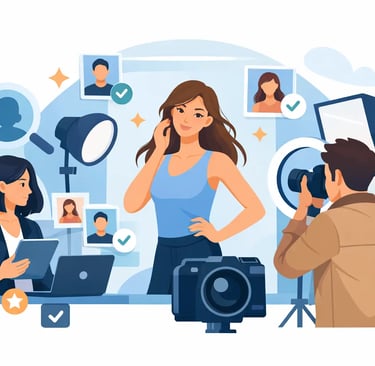
A casting director can tell in seconds when a photo is helping you - and when it is getting in the way. That is why strong casting submission photo tips are not just about looking good. They are about looking right for the roles you can actually book, in a way that feels current, professional, and easy to trust.
If your submission photo feels overworked, outdated, or disconnected from how you walk into the room, it can cost you attention before your reel or resume even gets a look. The good news is that you do not need a complicated setup or a celebrity-sized budget to fix that. You need smart choices that line up with how casting actually reviews talent.
Casting submission photo tips start with accuracy
The most useful photo is the one that looks like you on your best day. Not ten years ago. Not after heavy filters. Not after so much retouching that your skin no longer looks human.
Accuracy matters because casting is hiring a real person, not an edited concept. If your submission photo promises one thing and you show up as another, that disconnect creates friction right away. In a competitive market, friction is expensive.
This is where many performers make the wrong trade-off. They chase dramatic lighting, fashion styling, or a hyper-polished look because they want to appear more impressive. But for submissions, clarity usually beats flair. A clean, believable image gives casting what they need faster.
Wear clothes that support your type
Wardrobe should point casting in the right direction without turning into a costume. Think in terms of role range, not personal expression alone.
If you often submit for young professional, neighbor, teacher, startup founder, bartender, or grounded lead roles, your clothing should support that lane. Solid colors usually work better than loud prints because they keep the focus on your face. A fitted top, a clean neckline, and colors that flatter your skin tone do more for your submission than trendy styling.
It depends on your market and your casting goals, of course. A commercial look may call for brighter, more approachable styling. A theatrical image often benefits from more restraint and stronger eye contact. The key is choosing outfits that feel intentional and bookable.
Bring options if you are shooting. The difference between one usable look and several marketable looks is often just a jacket change, a neckline shift, or a color that better matches your brand.
Your expression should sell possibility
One of the most overlooked casting submission photo tips is this: stop trying to force intensity if your face does not live there naturally. The best expression is not the one that looks most serious. It is the one that creates a believable sense of who you are on screen.
Casting wants range, but your photo still needs focus. That means your expression should suggest a type or emotional world without becoming stiff or theatrical. A relaxed, confident look can read far more powerfully than an exaggerated “acting” face.
A strong headshot often feels like the moment before dialogue. There is thought behind the eyes. There is personality. There is enough openness for someone to imagine you in the role.
If every frame looks either blank or overly posed, the problem is usually not your face. It is that the shoot did not create the right environment to pull out natural reactions. That is why direction matters so much.
Lighting and background should stay out of the way
For casting submissions, simple usually wins. Clean light and an uncluttered background make your face easier to read at thumbnail size and full size.
Natural-looking studio lighting tends to perform well because it keeps detail in your eyes, skin, and features without adding distracting shadows. Busy outdoor backgrounds can work in some cases, but they can also pull attention away from the one thing casting actually needs to assess - you.
This does not mean every photo should look flat or generic. It means production choices should support your marketability, not compete with it. A strong submission image feels polished without looking precious.
Framing matters more than people think
Most casting platforms display images small at first. If your face is too far away, too cropped, or awkwardly angled, your photo loses impact before anyone clicks.
A standard head-and-shoulders crop is often the safest choice because it reads quickly and clearly. The eyes should be visible and alive. Your jawline should be defined by posture, not by aggressive editing. And your angle should feel natural, not like you are hiding one side of your face.
There is room for variation. Three-quarter crops can work well for certain looks, especially if body language adds something useful. But if you are building your main submission set, clean framing gives you the most flexibility across platforms.
Retouching should be invisible
A polished image is good business. Over-retouched skin is not.
Casting expects you to look prepared and professional, but they also expect you to look like yourself. Basic cleanup makes sense. Temporary blemishes, stray hairs, under-eye distractions, and color correction can help an image feel finished. Smoothing every line, reshaping features, or removing all skin texture usually hurts more than it helps.
The trade-off is simple. Heavy retouching may feel flattering in the moment, but it can weaken trust. A submission photo should create confidence that the person in the image is the person walking into the callback.
Match the photo to the platform and purpose
Not every image has the same job. A photo for theatrical submissions is not always the same photo you would lead with for commercial work, a personal website, or LinkedIn.
That is why some of the best casting submission photo tips are really about selection, not just shooting. You want the image that matches the role category, the platform, and the impression you need to create fast.
For actor profiles, lead with the photo that best represents your current booking type. For commercial submissions, choose something approachable and relatable. For more dramatic material, a stronger and more focused expression may be the better fit. The wrong photo is not always a bad photo. Sometimes it is simply miscast.
Update your photos before they become a problem
A lot of talent waits too long to refresh their headshots. They keep submitting old images because they still seem “good enough.” Meanwhile, their hair changed, their weight shifted, their style matured, or their casting type evolved.
Your photos should reflect how you are walking into auditions now. If your current look does not match your online image, update it. If your materials still position you for a type you have outgrown, update them. If your headshot quality no longer matches the level of work you want, definitely update it.
Fresh photos can create momentum because they sharpen your package. They make your submissions look active, current, and ready. In a busy market like Los Angeles, that matters.
A better session gives you better options
Many performers think getting one decent shot is enough. In reality, a strong session should give you multiple usable looks, clean file delivery, and images that fit real submission needs.
That practical side matters. Fast turnaround matters. Having a short session option matters if you need something effective without overcomplicating the process. Having room for outfit changes matters if you want commercial and theatrical choices from the same shoot. These are business decisions as much as creative ones.
At Headshots by Wick, that is exactly how the session experience is approached - as a career tool, not a luxury extra. The goal is to leave with photos you can use immediately and confidently.
The best casting submission photo tips are the ones that book attention
A submission photo does not need to be flashy. It needs to be believable, current, and strategically aligned with the work you want. When wardrobe, expression, lighting, framing, and retouching all support that goal, your image starts doing what it is supposed to do: earning you a closer look.
That closer look is the whole point. A strong headshot will not book the role by itself, but it can absolutely get you into the conversation faster. Make choices that help casting say yes to the click, yes to the appointment, and yes to seeing more of what you can do.